NEW DELHI, INDIA (IST)
00:00:00 PM
|
Loading...
DETECTING LOCATION...
00:00:00 PM
|
Loading...
We are living in a fool’s paradise, built on a foundation of shifting sand and microscopic silicon. For decades, the global financial elite, Silicon Valley executives, and complacent policymakers have operated under the comfortable delusion that global supply chains are resilient, self-healing networks. They are not. The entire edifice of modern civilization—from the neural networks training tomorrow’s artificial intelligence to the guidance systems of nuclear deterrents—hangs by a gossamer thread over a 160-kilometer stretch of water known as the Taiwan Strait.
Let us strip away the diplomatic pleasantries and academic euphemisms. Taiwan maintains a near-monopoly on leading-edge semiconductors, fabricating over 90% of the world’s sub-10 nanometer chips. This is not merely a concentrated market; it is a singular, terrifying chokepoint. The global economy has outsourced its brains to a single island sitting directly on a geopolitical fault line. President Xi Jinping has already signaled that the Taiwan issue cannot be passed down through generations, framing control of the island as a non-negotiable prerequisite for China’s “national rejuvenation” by 2049. Yet, the markets continue to trade at record multiples, pricing in a stability that simply does not exist.
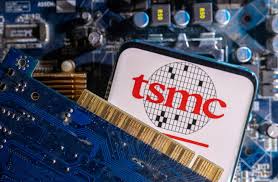
The structural fragility of this arrangement is unprecedented. If Taiwan Semiconductor Manufacturing Company (TSMC) goes dark tomorrow, the global machinery stops. This is not a speculative theory; it is a mathematical certainty. The current mainstream discourse treats a potential Taiwan contingency as a traditional geopolitical friction—a bump in the road that can be smoothed over with strategic reserves and diplomatic posturing. This analysis will systematically dismantle that complacency.
The vulnerability of our high-tech ecosystem is deeply asymmetrical. While the West controls much of the foundational intellectual property and the highly specialized machinery required to print silicon, the actual execution—the physical manifestation of these designs—is hyper-concentrated. We have built an economic architecture where the design of a chip happens in California, the lithography machine comes from the Netherlands, but the actual printing of the world’s most advanced logic occurs almost exclusively on Taiwanese soil.
This concentration of technological prowess means that any disruption is non-linear. In economics, we often rely on historical precedents to model shocks. We look at the 1973 oil crisis or the 2008 financial meltdown. But those were shocks of scarcity and liquidity, respectively. A semiconductor blockade is an entirely different beast: it is a shock of absolute structural termination. You cannot substitute a sub-7nm graphics processing unit (GPU) with a legacy microcontroller. Without these chips, the deployment of advanced artificial intelligence infrastructure ceases instantly, bringing the multi-billion-dollar hyperscaler buildouts to an abrupt, grinding halt.
| Node Category | Global Market Share (Taiwan) | Primary Western Dependents | Strategic Alternative Sources |
| Leading-Edge (<10nm) | > 90% | Apple, NVIDIA, AMD, Qualcomm | Samsung (Limited Yields) |
| Advanced Logic (10nm-28nm) | ~ 40% | Automotive, Industrial IoT, Aerospace | Intel, GlobalFoundries |
KADVA SACH (The Bitter Truth): The Western world’s tech revolution is a house of cards. We brag about software engineering and algorithmic supremacy, but we have surrendered the physical means of production to a geography that our adversaries claim as their own.
The illusion of a “controlled escalation” evaporates within the first forty-eight hours of a naval and aerial blockade. Forget the sterile projections of institutional think tanks; let us examine the psychological and mechanical reality of the ground level. Immediately following a blockade, TSMC’s facilities would not simply wait out the storm. They would likely drastically cut back or halt operations entirely. Whether through deliberate internal “kill switches” designed to prevent proprietary technology from falling into hostile hands, or via the immediate collateral physical damage to infrastructure associated with an aggressive blockade, the supply of over 90% of the world’s advanced semiconductors would sever in a heartbeat.
The psychological contagion would hit the global equity markets like a thermonuclear blast. Wall Street is currently valuing technology giants on the assumption of infinite, compounding growth driven by AI hardware deployment. When the primary hardware supplier vanishes, that narrative implodes. We are looking at a catastrophic shock capable of wiping out between $5 trillion and $10 trillion in global equity value within days. This is not a mere market correction; it is the instantaneous destruction of capital on a scale never seen in human history.
As panic spreads, global AI infrastructure builds will freeze. Tech conglomerates and sovereign governments will immediately hoard their existing inventories, creating a hyper-bifurcated market of haves and have-nots. The supply chains for everyday essentials—smartphones, medical devices, modern vehicles, and advanced military hardware—will succumb to widespread paralysis. Retaliatory sanctions from the G7 nations and counter-measures from Beijing would lock down global trade pipelines, triggering a massive capital flight and freezing up to $3 trillion in foreign exchange reserves. Liquidity will dry up as the financial world suddenly realizes that the collateral backing their complex derivatives is tied to physical hardware that no longer exists.
| Financial Indicator | Pre-Blockade Baseline | Expected 14-Day Trajectory | Systemic Economic Trigger |
| Global Equity Valuations | $110 Trillion (Estimated) | $5T to $10T Destruction | Tech sector earnings expectations collapse to zero. |
| Foreign Exchange Liquidity | Fluid Global Flows | $3 Trillion Frozen | Weaponization of central bank reserves and sanctions. |
KADVA SACH (The Bitter Truth): Wall Street’s current valuations are a collective hallucination. The market prices risk as a linear variable, completely blind to the fact that a single geopolitical trigger can turn trillions of dollars of digital wealth into vapor overnight.
Twelve months into a sustained blockade, the global economy would not be entering a standard recession—it would be plunging into a structural depression. The comforting theories of “just-in-time” supply chains and corporate resilience would lie buried under the weight of empty assembly lines. Global Gross Domestic Product (GDP) would contract by an unprecedented 5% to 10%. To put that in perspective, this contraction would dwarf the 2008 financial crisis, transforming the economic landscape into a battleground of rationing, hyperinflation in tech commodities, and structural unemployment.
The illusion of immediate corporate adaptability would be shattered. While complacent market analysts frequently point to buffer inventories held by hyperscalers, original equipment manufacturers, and global distributors, a year is more than enough time to completely bleed those stockpiles dry. Silicon Valley would discover the hard way that you cannot write code to substitute for missing physical logic. The raw computing power required to train frontier AI models would undergo strict corporate and state-sponsored rationing, turning what was once a booming commercial race into a highly restricted national security asset. Progress would not stop entirely, but it would mutate; the tech sector would be forced to abandon its dreams of infinite hardware scaling and desperately pivot toward algorithmic efficiency and smaller, highly optimized models just to survive.
In response to the catastrophic paralysis of their industrial bases, the United States and its G7 allies would inevitably launch an “Apollo program”-scale capital expenditure initiative. Governments would panic-print and inject upward of $500 billion into domestic fabrication facilities in a frantic bid to rapidly replace the lost Taiwanese capacity. But money cannot bribe physics, nor can it compress time.
The mainstream political narrative suggests that a massive influx of capital can build a cutting-edge semiconductor ecosystem out of thin air. This is a dangerous lie. Even with unlimited sovereign funding, advanced semiconductor fabs are bound by brutal engineering realities, hyper-specific construction timelines, extreme lithography equipment bottlenecks, and an acute shortage of highly specialized engineering talent. You cannot build a cleanroom overnight, and you cannot train a generation of specialized chemical and optical engineers in a few months. The Western world would find itself trapped in a multi-year purgatory: spending half a trillion dollars while its domestic industries continue to starve for actual silicon chips.
KADVA SACH (The Bitter Truth): Throwing hundreds of billions of dollars at a structural engineering crisis is a sign of political desperation, not economic strategy. You cannot print a lithography machine with fiat currency, and you cannot compress a five-year engineering cycle into twelve months.
Beijing’s calculations would face an equally brutal reality check. While a blockade might fulfill a long-standing ideological directive, the economic blowback would threaten the internal stability of the state. Under the weight of comprehensive Western sanctions, asset freezes, and sweeping trade embargoes, China’s GDP would face a severe contraction of 5% to 8%. The economic engine that powered its rise over the last three decades would seize up as its export markets dry up and access to global capital networks is severed.
More importantly, the assumption that China could simply march in and seize functional control of TSMC’s advanced foundries is an absolute myth. A cutting-edge semiconductor fab is not a static factory; it is an organic, highly dependent node in a global web. Without a continuous stream of proprietary software updates, specialized chemicals from Japan and Europe, and critical replacement parts for advanced lithography systems—such as those manufactured by ASML—the most advanced fabs on earth would degenerate into useless monuments of glass and steel within weeks. China might gain physical possession of the soil, but the actual technological sorcery would vanish, leaving it isolated from western equipment providers and starving for the very cutting-edge chips it sought to control.
KADVA SACH (The Bitter Truth): Physical conquest in the 21st century is an anachronism. You can occupy a building, but you cannot bayonet a software algorithm or torture a cleanroom into functioning without its global supply chain. Beijing’s victory would be a hollow shell.
Five years after the initial shockwaves of the blockade, the global economic landscape resembles a scarred, heavily militarized zone of industrial survival. The old world of hyper-efficient, borderless tech supply chains is dead and buried. In its place sits a deeply bifurcated, highly inefficient technology ecosystem, split down the middle by an ideological and geoeconomic Iron Curtain. The United States and its allied nations, having spent half a decade burning through capital, finally manage to bring heavily subsidized, next-generation fabs online across North America and Europe. But this is no victory; it is an incredibly expensive consolation prize.
The structural financial hangover of this forced re-shoring is staggering. Total global capital expenditure dedicated solely to duplicating and securing semiconductor supply chains has blown past a monumental $1.5 trillion. This capital was not invested to drive innovation, expand markets, or discover new breakthroughs; it was spent entirely on survival—replicating infrastructure that already existed in Taiwan before the crisis. As a direct consequence, the cost of advanced microchips is two to three times higher than pre-blockade levels. This permanent hardware premium cascades through every layer of the global macroeconomy, structurally raising the cost of consumer electronics, automotive production, and AI cloud infrastructure for a generation.
For a generation, the tech sector operated under the comforting law of computing becoming exponentially cheaper and more accessible. That era is over. The hyper-concentration of Taiwanese manufacturing was what made the digital gold rush economically viable. When you break that mirror, you are left with fractured, high-cost domestic monopolies protected by massive tariff walls.
Silicon Valley, once the epicenter of speculative software valuations, has been forced to fundamentally alter its DNA. Tech companies can no longer rely on brute-force hardware scaling. The persistent hardware premium has turned computing power into an elite commodity. This has triggered a massive, forced pivot in the artificial intelligence sector: instead of building increasingly massive, data-hungry frontier models that require thousands of scarce, hyper-expensive next-gen GPUs, the industry’s best minds are now entirely focused on algorithmic efficiency, mathematical optimization, and highly localized, smaller neural networks. The golden age of cheap, unconstrained digital expansion has been replaced by an era of strict hardware conservation.
| Component / Infrastructure | Pre-Blockade Cost Baseline | 5-Year Post-Blockade Cost | Systemic Macroeconomic Impact |
| Advanced AI Accelerator / GPU | $30,000 | $75,000 – $90,000 | Cloud compute costs triple; venture capital shifts away from hardware-heavy startups. |
| Flagship Consumer Smartphone | $1,000 | $1,800 – $2,200 | Extension of consumer upgrade cycles; contraction of global retail tech markets. |
KADVA SACH (The Bitter Truth): Globalism artificially lowered the price of civilization. Re-shoring is a polite political term for permanent inflation. The shiny gadgets and cheap cloud storage of the past decade were luxury items masquerading as utilities, paid for by the geopolitical instability of the Taiwan Strait.
While the West spent five years frantically chasing sub-3nm capabilities, Beijing executed a brutal, pragmatic pivot. Completely isolated from Western equipment providers and blocked from accessing ASML’s advanced lithography tools, China abandoned its short-term ambitions for leading-edge AI chip dominance. Instead, it weaponized its existing domestic capabilities to establish an absolute stranglehold on the global legacy chip market (28nm and wider nodes).
Legacy chips are the unglamorous workhorses of the modern world. They power the braking systems in your cars, the medical monitors in your hospitals, the grid infrastructure of your energy sectors, and the guidance systems of basic defense machinery. By flooding the global market with heavily state-subsidized, unbeatably cheap legacy semiconductors, Beijing has created a secondary chokepoint. The West now finds itself in a deeply ironic, perilous position: it has spent trillions to manufacture high-end chips for next-generation smartphones and AI models, but it remains structurally dependent on Chinese foundries for the basic silicon required to keep its traditional industries from collapsing.
| Semiconductor Tier | Western Block Standing (US/EU/Japan) | Chinese Block Standing | Strategic Vulnerability |
| Leading-Edge (Sub-3nm AI Logic) | Dominant (High-Cost Local Production) | Severely Lagging / Stagnant | Western models are hyper-optimized but prohibitively expensive to run at scale. |
| Legacy & Mature Nodes (>28nm) | High-Cost, Insufficient Volumes | Absolute Market Monopolization | G7 industrial sectors remain vulnerable to sudden Chinese export controls on basic silicon. |
SUNHRA AVSAR (The Golden Opportunity): For China, the denial of advanced tools forced an indigenous industrial discipline that Western sanctions intended to destroy. By mastering the low-end, high-volume market, Beijing has secured an economic kill-switch over the West’s legacy manufacturing sectors that no amount of Silicon Valley software can override.
Ten years after the first naval transit was halted in the Taiwan Strait, the global economy has finally stopped bleeding, but the patient is permanently disfigured. A new, fragile technological equilibrium has emerged from the ash heap of the old globalized order. The United States has achieved what political rhetoric long promised but economic reality resisted: near-total self-sufficiency in advanced AI hardware manufacturing. Fabs across Arizona, Ohio, and Europe are fully operational, churned by a decade of continuous government lifelines. But this independence is an artificial, sterile ecosystem, completely decoupled from the market dynamics that once drove the digital age.
Across the geopolitical divide, Beijing has defied the Western consensus that predicted its total technological stagnation. Cut off from the Western intellectual property pipeline, China built an entirely indigenous, parallel semiconductor ecosystem from the raw chemicals up to the electronic design automation (EDA) software. They remain one to two generations behind the West in the most advanced, dense AI architectures, but they have eliminated their vulnerability to foreign chokepoints. The world is now structurally locked into an entrenched Tech Cold War, where two entirely separate digital universes operate with completely different standards, materials, and architectures.
The stabilization of the global economy is a grim solace. The permanent duplication of supply chains and the absolute destruction of Taiwanese manufacturing efficiency have left a lasting scar on global productivity. Global GDP sits approximately 2% to 4% lower than the pre-blockade baseline trajectory. This is not a temporary dip; it is a permanent loss of economic potential. Every smartphone, server, satellite, and medical device carries the deadweight loss of redundant factories built across fractured geographies.
The cost of AI infrastructure has finally begun to normalize relative to this new, higher baseline. However, this normalization was not driven by a return to cheap silicon, but by sheer survival-driven innovation. Barred from relying on cheap, mass-printed silicon chips, the West was forced to pioneer advanced packaging techniques and alternative, non-silicon semiconductor materials. Silicon Valley is no longer a place of reckless software startups burning cheap cloud compute; it is a highly regulated, capital-intensive utility market where hardware is treated with the same conservation as enriched uranium.
| Macroeconomic Vector | Pre-Blockade Paradigms | Year 10 Cold War Equilibrium | Long-Term Structural Consequence |
| Supply Chain Efficiency | Hyper-optimized, single-source (Taiwan) | Redundant, regionalized, tariff-protected | High structural floor for inflation; lower global corporate profit margins. |
| AI Architectural Focus | Massively dense models, brute-force compute | Multi-material chips, hyper-efficient algorithms | AI is highly specialized and industrial, rather than an ubiquitous consumer commodity. |
| Geopolitical Interdependence | Interlocking tech ecosystems (Chimerica) | Absolute systemic bifurcation | Total zero-sum economic warfare; high risk of localized kinetic proxy conflicts. |
KADVA SACH (The Bitter Truth): Self-sufficiency is a polite word for a siege economy. The United States and China have both achieved security, but they paid for it by burning down the globalized engine that created the modern middle class. The tech industry didn’t die, but it grew up, grew expensive, and became an arm of the state.
In this new decade, the concept of a neutral tech player has been completely eradicated. Smaller nations that once played both sides—importing Western software while exporting hardware to Eastern markets—have been forced to swear fealty to one of the two silicon empires. The global south is fractured; nations are choosing their digital master based on who finances their data centers and who supplies their cellular grids.
The semiconductor industry is no longer governed by the laws of supply and demand, but by the dictates of national security directives. The capital markets have accepted this reality, trading the wild volatility of the early blockade years for the slow, heavily managed yields of defense-adjacent utilities. The world has stabilized, but it is the stability of a frozen trench line.
| Geopolitical Sphere of Influence | Primary Hardware Foundation | Architectural Standard | Strategic Leverage |
| Western Allied Bloc (G7 + Partners) | Western-produced Silicon/Non-Silicon Logic | Closed, proprietary, security-vetted | Monopoly on absolute frontier compute and foundational AI algorithms. |
| Eastern Bloc (China + Global Alignment) | Indigenous Chinese Foundries (Legacy to Mid-Node) | Open-source alternative stacks, hardware-software co-design | Complete dominance of the global industrial and automotive components supply. |
KADVA SACH (The Bitter Truth): The open internet and global tech ecosystem were a brief historical anomaly, a thirty-year vacation from history. By relying on a single island for the brainpower of the world, we ensured that the vacation would end in a multi-trillion-dollar hard landing.
The ultimate delusion of the modern economic consensus is the belief that stability is the default state of human affairs. For decades, global markets, corporate boardrooms, and political elite have treated the hyper-concentration of semiconductor manufacturing in the Taiwan Strait as an administrative quirk—a logistical puzzle to be managed with fine-tuned insurance policies and clever corporate rhetoric. It was never a puzzle. It was a ticking economic time bomb with a fuse lit by raw geopolitical necessity.
Let us be completely unsparing in our final assessment. The corporate world spent thirty years optimizing for short-term profit margins at the absolute expense of systemic survival. They built an intricate, multi-trillion-dollar digital empire, but they left the keys to the entire kingdom on a single island sitting in the crosshairs of a rising superpower. The projections we have deconstructed over the various timelines are not speculative science fiction; they are the architectural blueprints of an inevitable structural correction. When the physical supply of advanced silicon drops, the digital facade of the global economy will wash away, revealing a harsh, fragmented reality where physical manufacturing and raw material ownership are the only true metrics of sovereign power.
As we look toward the horizon of 2030, the global economic landscape will be defined not by seamless technological evolution, but by a brutal, capital-intensive scramble for physical insulation. The world is transitioning out of the era of speculative digital expansion and entering a prolonged period of high-cost industrial militarization.
Below are the definitive, high-conviction structural shifts that will manifest between 2026 and 2030:
The Sovereign Capital Drainage: Governments across the G7 will be forced to continuously inject sovereign funds into domestic fabrication projects. This permanent state-sponsored life support will crowd out private venture capital from software innovations and redirect it entirely into heavy industrial duplication, permanently lowering the global baseline for speculative tech valuations.
The AI Stratification: The open-ended race to build infinite, trillion-parameter frontier AI models will collapse under the weight of hardware scarcity and extreme cost structures. The artificial intelligence sector will split into two distinct tiers: hyper-expensive, state-vetted national security mainframes and highly optimized, resource-conserving local architectures. AI will cease to be a cheap consumer commodity and will become an elite institutional utility.
The Rise of Legacy Chokepoints: While Western capital remains obsessively focused on building leading-edge capacity locally, China will successfully secure an absolute monopoly over the legacy and mature semiconductor nodes (28nm and wider). By 2030, any Western attempt to completely decouple will be met with immediate retaliatory export controls on the basic silicon required to keep the automotive, medical, and aerospace industries of the West from grinding to a halt.
| Strategic Vector | Pre-Crisis Illusion | 2030 Concrete Reality | Structural Impact |
| Tech Stock Valuations | Driven by infinite scaling software margins | Tied strictly to physical hardware security and supply guarantees | Structural contraction of tech sector price-to-earnings (P/E) multiples. |
| Semiconductor Logistics | Borderless, just-in-time, market-driven | Nationalized, tariff-protected, state-rationed | Permanent 2% to 4% drag on global economic productivity. |
SUNHRA AVSAR (The Golden Opportunity): For the agile economic strategist, the death of cheap silicon is the birth of the physical optimization era. The massive fortunes of the next half-decade will not be made by creating another bloated, cloud-dependent software application, but by engineering the hardware-agnostic systems, advanced materials, and algorithmic efficiencies that allow civilization to run on a fraction of the computing power.
The global financial system is fundamentally broken in how it calculates geopolitical risk. It treats a Taiwan contingency as a high-impact, low-probability “black swan” event that can be hedged against with diversified equity portfolios or defensive currency allocations. This is a fundamental misunderstanding of the modern industrial base. A disruption in the Taiwan Strait is not a market event; it is the termination of the operational baseline of contemporary society.
My verdict is stark, direct, and unaligned with the comfortable consensus of Wall Street or Brussels: The global economy is structurally unprepared for the physical reality of its technology dependencies. We have spent a generation pretending that software had decoupled from the earth, only to find that the entire digital cloud is anchored to a few square kilometers of highly vulnerable Taiwanese soil. The transition to a post-globalized, bifurcated world will be incredibly expensive, highly inflationary, and deeply chaotic. The corporate entities and sovereign states that survive this transition will not be those with the highest digital valuations or the most sophisticated software algorithms, but those that possess the raw, unyielding discipline to secure their physical means of production.
The era of cheap tech and easy globalism is over. The chips are about to fall, and they are going to land hard.
The illusions of global economic security are crumbling in real-time, and relying on mainstream financial reporting is a definitive recipe for structural blindness. Do not let your capital, your business, or your strategic outlook be caught on the wrong side of the silicon chokepoint.
Subscribe to India Data Report today. Get access to our deep, unsparing investigative breakdowns, primary source economic datasets, and hard-hitting structural analyses that strip away the corporate public relations to reveal the raw, unvarnished realities of the global supply chains.
Secure your perspective before the grid goes dark.
Because semiconductor fabrication facilities (fabs) are the most complex structures built by humanity, not standard factories. You cannot compress physics with fiat currency. Even with unlimited sovereign funding, a cutting-edge cleanroom requires at least three to five years to construct, calibrate, and staff. Furthermore, you face an absolute physical bottleneck: the entire global tech ecosystem relies on a single Dutch company, ASML, to build the highly complex lithography machines required to print advanced silicon. The machinery supply chain is just as jammed as the foundries themselves.
Not at scale. While Samsung possesses leading-edge capabilities, its commercial manufacturing yields—the ratio of usable microchips per wafer—have historically lagged significantly behind TSMC’s hyper-optimized operations. Intel is spending billions to catch up, but it is still re-engineering its business model to operate as a commercial foundry. As it stands today, there is zero spare global capacity. If Taiwan goes offline, you cannot simply shift production; the global supply of advanced logic instantly drops by over 90%.
It is a conservative calculation of structural panic. Wall Street has priced technology and mega-cap companies at historic premiums based on the assumption of unconstrained growth in artificial intelligence and cloud infrastructure. When the physical engine powering that growth vanishes, the narrative completely implodes. The panic would not be isolated to tech stocks; it would trigger an immediate, systemic cascade across automotive, logistics, retail, and banking sectors, causing a synchronized global asset liquidation.
Absolutely not. A cutting-edge fab is an organic node in a global web, not a standalone machine. The moment a blockade isolates the island, the foundries lose access to mandatory daily software updates from the US, specialized chemical formulations from Japan, and critical replacement parts from Europe. Without this continuous international life support, the most advanced cleanrooms on earth degenerate into useless monuments of glass and steel within a matter of weeks.
It alters your daily cost of living permanently. Legacy microchips—the cheaper, wider nodes—power the absolute basics of modern life: the braking systems in your car, the grid infrastructure delivering your electricity, your home appliances, and basic medical diagnostic tools. Because a crisis forces a brutal, multi-trillion-dollar duplication of global supply chains, the permanent hardware premium will manifest as structural inflation. Your gadgets will become luxury items, your cars will double in price, and the era of cheap consumer tech will end.